
Robotics Valuation Reset: What Investors Learned in January 2026

Good morning everyone!
It has been a very busy couple of weeks for me, hence why I missed last week’s commentary, but hopefully I can now get back at it. This is the missed commentary from last week, concluding the January robotics focus.
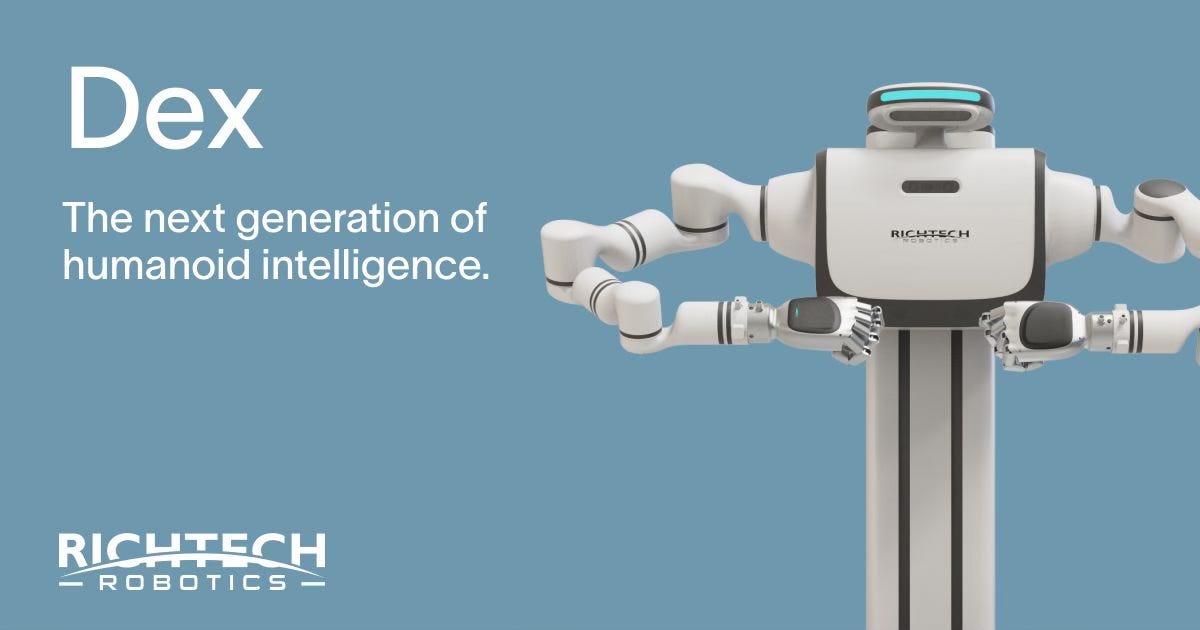
Small-cap robotics stocks faced their first real credibility test this past late January, and the results aren’t really encouraging. Richtech Robotics (RR) dropped over 20% on January 29 after a Hunterbrook Media report raised questions about the company’s valuation and business fundamentals, triggering securities fraud lawsuits. The stock closed the week around $3.69, down from its January 27 peak of $5.5, while trading at 166 times EV-to-sales despite revenue of just $5.05 million in fiscal 2025. On January 28, the company announced a private placement with an institutional investor and a collaboration with Microsoft’s AI Co-Innovation Labs to enhance its ADAM robot, but neither announcement could prevent the selloff. The timing is notable: Richtech showcased its humanoid robot Dex at CES 2026, powered by NVIDIA’s Jetson Thor chip, yet investors are now questioning whether the company can translate technology demonstrations into sustainable revenue.
The divergence between large-cap infrastructure plays and small-cap execution is (unfortunately) very obvious. NVIDIA released its comprehensive robotics ecosystem at CES on January 5, featuring the Isaac GR00T N1.6 model downloaded over 1 million times and the Blackwell-powered Jetson T4000 module delivering 1,200 teraflops at 40 to 70 watts. Boston Dynamics debuted its new Atlas humanoid publicly for the first time, with parent company Hyundai planning to manufacture 30,000 robots annually by 2028. These companies are building the platforms that enable robotics deployment at scale. Meanwhile, the small-caps operating in that same ecosystem are struggling to prove they can capture meaningful market share or generate returns that justify their valuations.
UiPath (PATH) represents the only exception, demonstrating that small-cap ‘robotics-adjacent’ companies can deliver operational progress. The company achieved its first GAAP-profitable quarter in Q3 fiscal 2026, with revenue climbing 16% year-over-year to $411 million. The stock has traded as low as $11.86 in February so far ($12.14 at the time of writing), down significantly from its 52-week high of $19.84 but reflecting a company transitioning from pure robotic process automation to comprehensive agentic AI orchestration. Current remaining performance obligations reached $820 million, up 14% year-over-year, with a gross margin of 84.9%. UiPath’s partnerships with OpenAI, Google, Microsoft, and NVIDIA position it as infrastructure for enterprise automation rather than a hardware deployment story.
Oshkosh Corporation (OSK) continues developing autonomous capabilities through its Doosan Bobcat subsidiary, which showcased the Rogue X3 concept loader at CES with AI-powered autonomous features. The company operates at the intersection of traditional manufacturing and robotics integration, representing the established industrial approach to automation rather than the speculative pure-play robotics model. However, Oshkosh’s market cap places it near the upper boundary of mid-cap territory, and its robotics initiatives represent a small fraction of overall operations in construction and defense equipment.
Market movements across January suggests that robotics investments are essentially bifurcating. Companies demonstrating actual revenue generation, positive unit economics, and clear paths to profitability can attract institutional capital. Companies trading on technology demonstrations, partnership announcements, and future deployment promises, are facing increased scrutiny (and rightly so if you ask me), particularly when valuations run far ahead of revenue, which seems to be a very common occurrence nowadays. Richtech’s EV-to-sales ratio against $5.05 million in annual revenue and $15.75 million in losses illustrates the valuation disconnect investors are no longer willing to overlook.
January also brought clarity on what “commercialization” means in humanoid robotics. Boston Dynamics’ Atlas entering production with Hyundai represents real deployment, standing in contrast to pilot programs, technology showcases, and limited unit deployments that characterize most small-cap announcements. The industry is moving from proof-of-concept to production-grade systems, and companies unable to demonstrate that transition are getting repriced accordingly, though, we cannot discount the fact that the whole market is re-positioning itself following many companies overvaluations.
For the month of February, I will move away from robotic stocks and focus on nuclear stocks. I hope you’ll enjoy the read, and if you have specific companies (small-mid cap) that you wish me to research more in detail, please do say so!
If this piece helped you, like it, share it, or repost it on Substack, it really helps my work reach more readers like you, and consider subscribing to receive new posts directly to your inbox!